Dozzier News Dozzier News
By Emmanuel Ndon
The youth agribusiness initiatives introduced by Governor Eno are transforming rural unemployment into agricultural productivity through targeted training, enterprise support, and commercial farming development.
Through partnerships with institutions such as Songhai Farms, NAADI and LIFE-ND, thousands of young people in Akwa Ibom State are receiving practical agricultural training, access to funding, and cooperative development support aimed at building a new generation of agripreneurs.
The programme combines technical agricultural education with structured financial empowerment. Youth participants undergo intensive training in integrated farming systems including fish farming, poultry production, hydroponics, crop cultivation and waste recycling technologies. Additional enterprise training equips cooperatives with financial management, accountability systems and business development skills necessary for sustainable agribusiness expansion.
Governmental support schemes further strengthen implementation. Through the ARISE empowerment programme, youth farmers gain access to tractors, irrigation facilities, processing equipment and agricultural inputs that enable a transition from subsistence farming to commercial-scale production. These interventions improve productivity while creating direct links between youth farms and institutional supply chains in public schools and healthcare facilities.
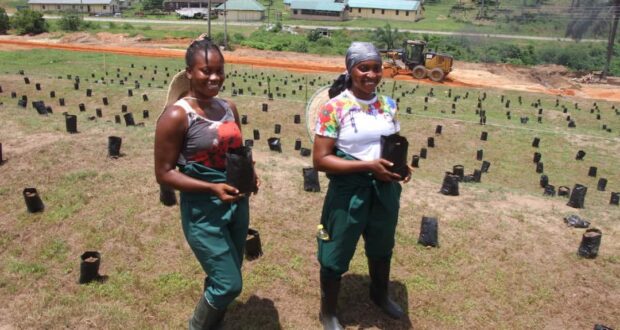
For many unemployed graduates and rural youths, agribusiness now provides a practical alternative to underemployment and migration. Young people are establishing cassava farms, fish production centres, poultry businesses, vegetable clusters and agro-processing ventures that generate stable income while contributing to local food supply systems. Female participation remains a major component of the initiative, expanding economic opportunities for women within the agricultural sector.
Economic benefits are increasingly visible in rural communities. Agricultural cooperatives stimulate local commerce, equipment supply chains create technical jobs and increased food production contributes to price stability in local markets. Expanded processing activities also support emerging agro-industrial networks in the state.
Communities are experiencing broader social and economic renewal through the programme. Youth farm clusters strengthen rural economies, increase local employment opportunities and encourage agricultural entrepreneurship among secondary school students and young graduates. Cooperative farming systems also improve community participation and shared economic activity.
Agricultural productivity has improved through the adoption of modern farming techniques and improved seedlings. Fish production, poultry integration, rice cultivation and cassava processing now operate with greater efficiency and higher output, helping to strengthen food availability across the state.
The programme also contributes to state economic growth through agro-processing, export development and increased internally generated revenue linked to agricultural commerce. Emerging agribusiness value chains support rural industrialisation while expanding opportunities for small and medium-scale enterprises.
Social cohesion is strengthened through cooperative participation involving youths from different communities and ethnic backgrounds. Shared farming ventures, agricultural fairs and local market systems encourage collaboration while promoting inclusive rural development.
Environmental sustainability forms an important aspect of the initiative. Solar-powered facilities, integrated waste recycling systems, climate-smart farming methods and agroforestry practices help reduce operational costs while improving resilience against environmental challenges.
The programme has also stimulated growth within supporting business sectors. Feed production, packaging services, equipment leasing, logistics and agricultural technology services continue expanding alongside increased farming activity in the state.
Performance monitoring mechanisms encourage accountability and long-term sustainability. Cooperative groups maintain production records and operational reports, while mentorship systems connect experienced participants with new trainees to strengthen continuity and knowledge transfer.
Championed by His Excellency, Governor Umo Eno, the Akwa Ibom’s Youth in Agribusiness Programme represents a strategic investment in food security, youth empowerment and rural economic development. By equipping young people with agricultural skills, support and opportunities, the initiative strengthens livelihoods while driving sustainable growth across the state.