Dozzier News Dozzier News
By Mabel EKANEM
Akwa Ibom State stands at a strategic economic crossroads. Few states in Nigeria possess the natural advantages that Akwa Ibom enjoys in the race for the blue economy. With its long Atlantic coastline, active fishing communities, oil and gas assets, and maritime geography, the state should naturally emerge as one of Nigeria’s leading industrial and shipping hubs. Yet, despite decades of promises and repeated political declarations, the dream of the Ibom Deep Seaport still remains largely on paper.
The concept itself is not in doubt. The economic potential is enormous. If properly executed, the Ibom Deep Seaport and the Oron Marine Terminal could reshape the economic future of not only Akwa Ibom but the entire South-South region. Ports attract industries, industries create jobs, and jobs stimulate urban and rural economies. The blue economy is no longer a fashionable slogan globally; it is a serious economic strategy that countries are using to diversify revenue, strengthen logistics, and reduce unemployment.
The concern, however, is no longer about vision. The concern is execution.
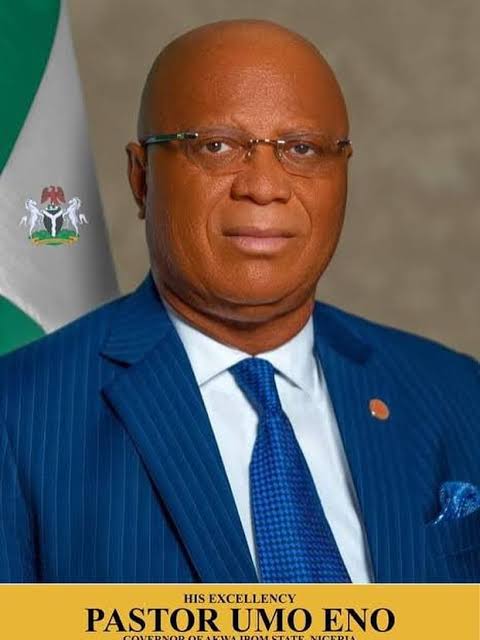
Governor Umo Eno deserves recognition for keeping the conversation alive. Unlike some administrations that quietly abandoned the project after political campaigns, his government has continued to push the maritime narrative through partnerships, feasibility engagements, investment discussions, and infrastructure rehabilitation around Oron. The signing of agreements with private investors and renewed focus on marine terminals indicate that the administration understands the importance of maritime development.
But governance is measured less by announcements and more by outcomes.
The Ibom Deep Seaport project has now survived multiple administrations, from Victor Attah to Godswill Akpabio and Udom Emmanuel. Each government presented the seaport as a transformational project. Each raised public expectations. Yet, after more than two decades, the average citizen still sees feasibility studies instead of cargo vessels, political speeches instead of cranes, and promises instead of visible maritime operations.
This is where public skepticism becomes understandable.
Governor Eno recently acknowledged that financing remains the biggest obstacle.
That admission may sound honest, but it also exposes a deeper problem in Nigeria’s infrastructure planning culture. Mega-projects are often politically celebrated long before sustainable financing structures are secured. Investors are cautious because ports are expensive, technically demanding, and highly competitive. A modern deep seaport requires dredging, security architecture, road and rail connectivity, industrial corridors, environmental protection systems, and stable long-term economic policies. Investors do not commit billions merely because governments hold summits or issue statements.
The politics surrounding the project has further complicated matters.
The governor’s repeated references to his relationship with the federal government as a pathway to achieving the seaport have generated criticism from both opposition voices and even members within his own political family. Critics argue that federal approval for the project had already been secured years ago and that the real challenge is not political access but project execution, investor confidence, and institutional consistency.
That criticism may sound harsh, but it reflects a wider frustration among citizens who have watched too many ambitious Nigerian projects become permanent campaign material.
Akwa Ibom people are not rejecting the blue economy vision. In fact, many strongly support it. What citizens increasingly demand is transparency, timelines, accountability, and visible progress. They want to see roads connecting industrial corridors. They want marine operations expanding in Oron. They want training opportunities for young people in maritime industries. Above all, they want assurance that the seaport will not become another monument to political ambition without economic substance.
The reality is that the blue economy cannot thrive on rhetoric alone.
If Akwa Ibom truly intends to become a maritime powerhouse, then government must move beyond ceremonial partnerships and feasibility reports into aggressive execution. The administration must create investor confidence through policy stability, transparent financing frameworks, and sustained infrastructure development. Political branding cannot replace technical delivery.
The state also needs continuity beyond electoral cycles. One of Nigeria’s greatest development failures is the tendency for projects to lose momentum whenever governments change. A project as massive as the Ibom Deep Seaport requires institutional commitment that transcends party politics and individual administrations.
Ultimately, the success of the blue economy agenda will not be determined by conferences, press releases, or political alignments.
The real verdict will come when ships begin to dock, industries begin to rise, and ordinary citizens begin to feel the economic impact through jobs, commerce, and improved livelihoods.
Until then, the Ibom Deep Seaport remains suspended between possibility and uncertainty , a powerful vision still waiting for concrete reality.