Dozzier News Dozzier News
By Emmanuel Ndon
Agriculture becomes more effective when it is organized, supported with investment and guided by a clear growth strategy. In Akwa Ibom, this approach is reflected in the Ibom Model Farm, an agricultural project introduced under Governor Umo Eno and designed to move farming beyond small-scale activity into a more structured driver of economic growth.
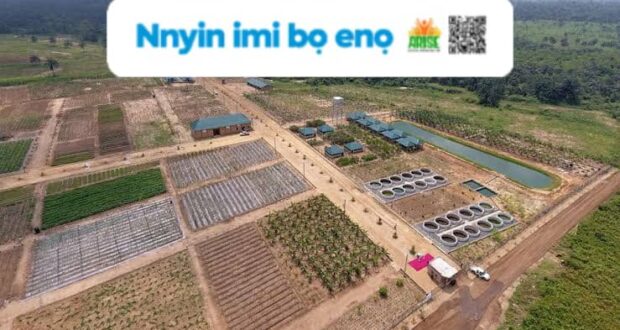
The Ibom Model Farm is located in Ikot Edibon, Nsit Ubium, and spans about 50 hectares. It is not designed as a conventional farm. Instead, it integrates crop production, livestock farming and agro-processing within a coordinated system. This model moves away from fragmented practices and introduces a more organized and productive approach to agriculture.
Under the direction of Governor Umo Eno, the project is being developed in phases, with attention given to both infrastructure and operations. The work goes beyond land preparation to include structured farm layouts, production systems and processing units designed to add value and support market readiness.
A key aspect of the development is the establishment of systems that support large-scale agricultural activity. The farm is organized into functional units, with processing and distribution built into the overall structure. This ensures that production is efficiently linked to the market.
Alongside physical development, there is a focus on capacity building. The farm is designed to function as a learning platform where individuals can gain practical knowledge in modern farming and agribusiness. This supports the development of a skilled workforce capable of sustaining the system.
Within the broader development framework of the state, the Ibom Model Farm contributes to strengthening agriculture as a productive sector. It supports food production while creating opportunities for economic expansion.
Employment Opportunities
The development phase engages engineers, contractors and artisans in construction and setup activities. As operations expand, employment extends into farming, processing, logistics and administration, providing both immediate and long-term opportunities.
Food Supply Stability
Increased production improves the availability of food within the state. By supporting a more stable supply chain, the project reduces dependence on external sources and strengthens food security.
Sustainable Income Opportunities
The integrated structure creates multiple points of participation. Individuals and businesses can engage in production, processing and distribution, making agriculture a more reliable source of income.
Rural Development
Located in Nsit Ubium, the project supports economic activity within the host community. It encourages local enterprise, supports infrastructure development and creates opportunities that reduce migration pressure on urban areas.
Economic Diversification
By strengthening agriculture, the project contributes to a more balanced economy. It reduces overdependence on limited revenue sources and supports long-term economic resilience.
The Ibom Model Farm reflects a structured approach to development, where value is defined not only by scale but by how effectively different components work together.
It also signals a shift in direction. Agriculture is being positioned as an organized economic system capable of driving growth, creating opportunities and supporting livelihoods.
Through this approach, a stronger link is established between productivity and prosperity. It reflects the broader commitment of Governor Umo Eno to developing agriculture as a key contributor to the economic future of Akwa Ibom State.